
If you have come across the term “SFM Compile” while working with Source Filmmaker (SFM Compile), 3D animation, or game-related content, you may be wondering what it actually means.
The phrase can refer to the process of preparing, converting, or building assets so they can work correctly inside Source Filmmaker and related Source-engine environments.
Source Filmmaker is a powerful tool for creating animated videos, scenes, posters, and cinematic projects using assets from Valve’s Source engine.
However, creating a project is not always as simple as importing a model and pressing play. Models, textures, animations, and other resources often need to be prepared in compatible formats. This is where the idea of SFM compile becomes important.
This guide explains what SFM compile means, how the process generally works, common file types involved, typical problems, and useful practices for people who are learning SFM Compile.
What Is SFM Compile?
SFM compile generally describes the process of converting or building 3D assets into formats that Source Filmmaker can use.
Source Filmmaker works with Source-engine asset formats. When an artist creates a model in software such as Blender, Maya, or another 3D application, that model usually cannot be placed directly into SFM Compile. It needs to be exported and prepared for the Source engine.
The compilation process can involve several stages, including:
- Preparing a 3D model
- Creating or assigning materials
- Converting textures
- Creating model configuration files
- Compiling the model into Source-compatible files
- Testing the finished asset inside SFM Compile
- Fixing errors or missing resources
Therefore, when people search for SFM compile, they may be looking for information about compiling models, textures, animations, or other Source-engine resources.
Understanding Source Filmmaker
Before discussing compilation, it helps to understand what SFM Compile actually does.
Source Filmmaker is a filmmaking and animation tool developed by Valve. It uses the Source engine to allow users to create cinematic sequences using characters, props, environments, lighting, cameras, particles, and animations.
Unlike a traditional 3D modeling program, SFM Compile is primarily designed around filmmaking.
Users can create:
- Animated short films
- Game cinematics
- Character animations
- Posters
- Promotional videos
- Comedy animations
- Action scenes
- Camera sequences
- Visual effects
Because SFM Compile relies on Source-engine assets, models must follow specific technical requirements.
Why Do Models Need to Be Compiled?
A 3D model created in a modeling application contains information that is not automatically understood by SFM Compile.
For example, a model may contain:
- Geometry
- Bones
- Weight information
- Materials
- Textures
- Animation data
- Collision information
Source Filmmaker requires these resources in formats compatible with the Source engine.
Compilation transforms the prepared asset into files that Source-based applications can understand.
This is why SFM Compile model compiling is an important part of the workflow for anyone creating custom assets.
SFM.Compile
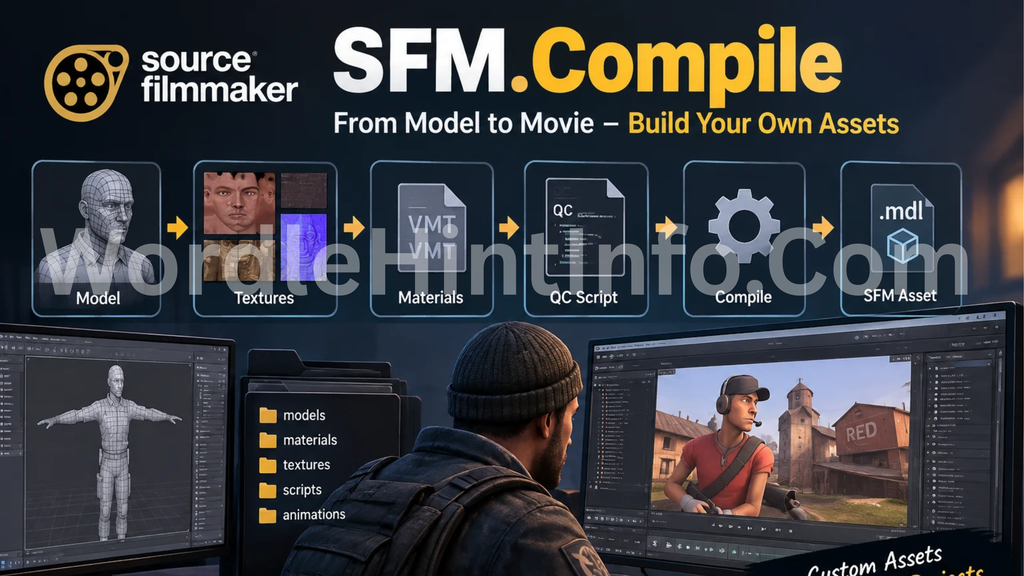
SFM.Compile can refer to the compilation process used to prepare custom assets for Source Filmmaker (SFM). This process converts models, textures, materials, animations, and related files into formats that the Source engine can recognize.
Creators may use compilation tools and configuration files to build custom characters, props, or other 3D assets for their projects.
A typical workflow involves preparing the model, organizing textures, configuring materials, creating the required compilation instructions, and then testing the finished asset in SFM.
Understanding SFM.Compile can help beginners troubleshoot missing textures, model errors, incorrect animations, and other common problems when adding custom content to Source Filmmaker.
Common SFM Compile File Formats
Understanding the file formats involved can make troubleshooting much easier.
MDL Files
The .mdl format is one of the most recognizable Source-engine model formats.
Compiled models commonly use MDL files along with additional supporting files. If a model has been successfully compiled, an MDL file is typically one of the files you will encounter.
Are Oats Good for You? 7 Amazing Health Benefits You Should Know: SFM Compile: 7 Powerful Tips to Master Source FilmmakerVTF Textures
Valve Texture Format, or VTF, is commonly used for textures in Source-engine games and applications.
Textures created in another image format may need to be converted into a suitable Source texture format.
VMT Materials
VMT stands for Valve Material Type.
VMT files define how a texture or material behaves in the Source engine. They can contain information about the shader, texture path, transparency, surface properties, and other material settings.
QC Files
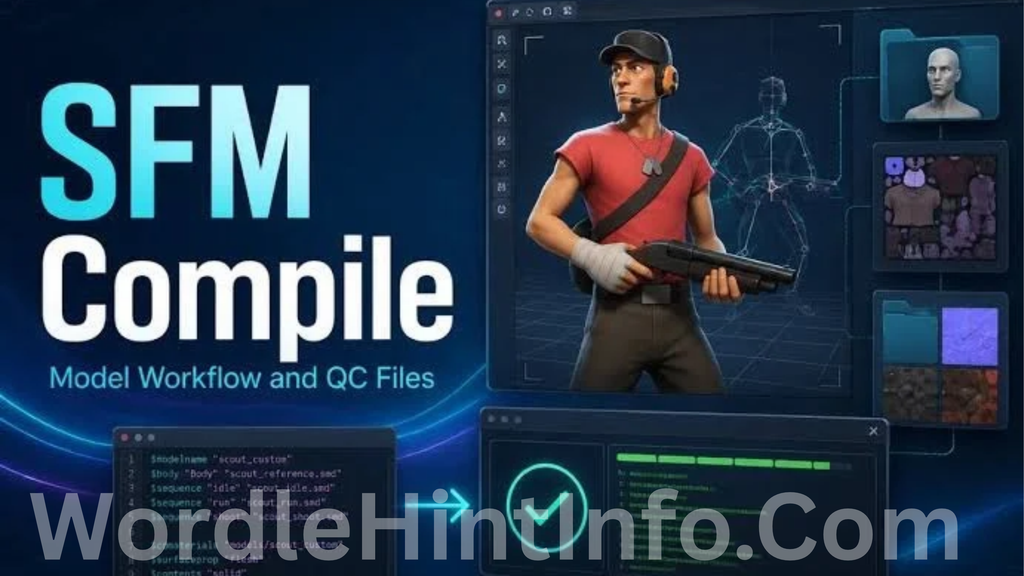
A QC file is a model compilation script.
It provides instructions to the Source model compiler, including information such as:
- Model location
- Materials
- Skeleton
- Animations
- Physics
- Output name
A correctly configured QC file is an important part of many SFM model compilation workflows.
SFM Compilation
SFM compilation is the process of preparing and converting 3D models, textures, materials, and animations so they can work correctly in Source Filmmaker (SFM).
It is commonly used by creators who want to add custom characters, props, or other assets to their SFM projects.
The process may involve preparing a model, organizing textures, creating material files, setting up a QC script, and using compatible Source tools to compile the final asset.
After compilation, the model can be tested inside SFM to check its textures, scale, rigging, and animations.
Understanding SFM compilation helps beginners create custom content and develop more advanced animation and filmmaking projects.
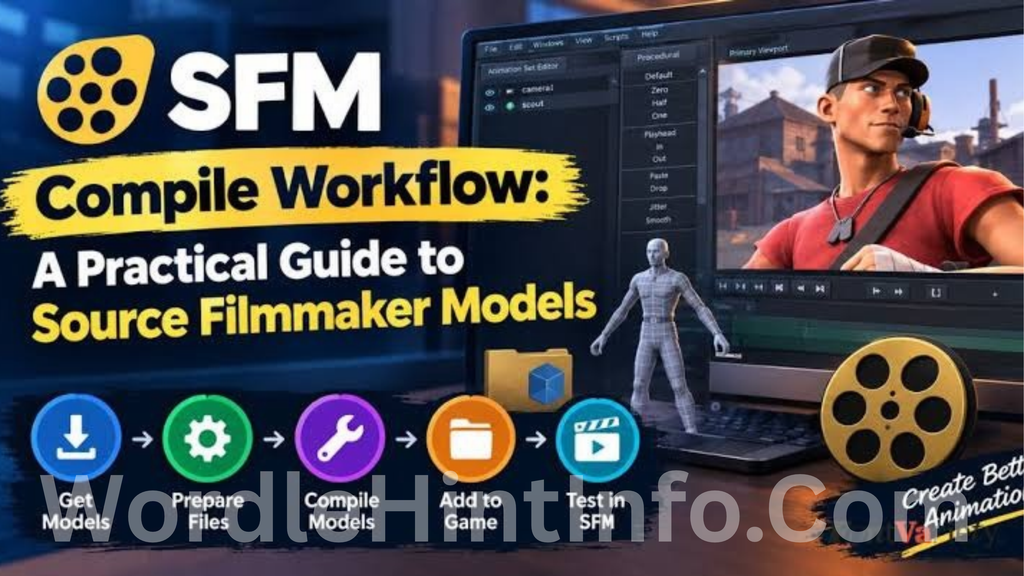
The Basic SFM Compile Workflow
Although exact workflows vary depending on the asset, the general process follows a similar pattern.
1. Create or Prepare the Model
The first step is creating or preparing the model in a compatible 3D application.
Blender and other modeling programs can be used to create or modify assets.
At this stage, you should check:
- Polygon structure
- Object names
- Scale
- Orientation
- Materials
- UV mapping
- Bone structure
Proper preparation can prevent many problems later.
2. Prepare the Textures
Textures should be organized and named consistently.
You may need to convert textures into formats suitable for the Source engine and ensure that their paths match the material definitions.
Incorrect paths are one of the common reasons models appear with missing textures.
3. Create the Material Files
Materials usually need corresponding VMT files.
The VMT tells the Source engine how the texture should be displayed.
For example, a material might need information about:
- Diffuse texture
- Normal map
- Transparency
- Surface appearance
- Shader properties
4. Create a QC File
The QC script contains instructions for compiling the model.
A basic workflow may reference the model’s geometry, materials, skeleton, and output location.
The exact commands depend heavily on the type of model being compiled.
5. Run the Model Compiler
Once the necessary files are prepared, the model compiler can process them.
If the compilation succeeds, Source-compatible model files are generated.
If it fails, the compiler normally produces an error message that can help identify the problem.
Thesindi Com: The Ultimate Guide to Topics, Safety and Trust 2026: SFM Compile: 7 Powerful Tips to Master Source Filmmaker6. Test the Model in SFM Compile
After compilation, the model should be tested inside Source Filmmaker.
Check whether:
- The model appears correctly
- Textures are visible
- Materials work properly
- Bones behave correctly
- Animations function
- The model has the correct scale
- Lighting behaves normally
Testing is an essential part of the process because a successful compilation does not always mean the asset will behave exactly as expected.
Common SFM Compile Problems
New users often encounter errors when compiling custom models.
Missing Textures
A model may appear purple, black, or otherwise incorrect when texture files cannot be found.
This is often caused by:
- Incorrect texture paths
- Incorrect VMT references
- Missing VTF files
- Incorrect folder structure
Checking the material path is usually an important troubleshooting step.
Model Compiler Errors
Compiler errors can result from incorrect QC commands, unsupported settings, missing files, or incorrectly prepared model data.
Reading the compiler output carefully is important. The error message often provides clues about the file or command causing the problem.
Incorrect Scale
A model can appear extremely large or extremely small inside SFM if its scale is not prepared correctly.
Always consider the Source-engine coordinate system and the scale used during modeling.
Broken Rigging
If the model contains a skeleton, incorrect bone weights or bone names can cause strange deformation.
For example, a character’s arms may move incorrectly if the vertices have been assigned to inappropriate bones.
Missing Animations
Animations may fail to load when their references, names, skeleton structure, or compilation settings do not match the model.
Testing animations individually can help identify where the problem originates.
SFM Compile Tools
Several tools and workflows can be used when working with Source-engine assets.
The appropriate tool depends on what you are trying to compile.
For example, a workflow may involve:
- A 3D modeling application
- Source SDK tools
- Model compilers
- Texture conversion tools
- Material editors
- SFM itself
When choosing tools, make sure they are compatible with the specific Source-engine version and SFM workflow you are using. Different Source-based games can have different requirements, so instructions designed for one game may not work perfectly with another.
SFM Compile vs. SFM Import
It is useful to distinguish between compiling and importing.
Importing generally means bringing an already compatible asset into SFM.
Compiling, on the other hand, involves preparing or converting an asset into a format that the Source engine can use.
For example:
3D Model → Preparation → Compilation → Source Files → SFM
Whereas an already compiled asset may simply follow:
Source Model → SFM → Animation/Scene
Understanding this difference can save time when troubleshooting.
How to Make SFM Compilation Easier
A clean workflow can significantly reduce errors.
Keep Files Organized
Use consistent folders for:
- Models
- Materials
- Textures
- Scripts
- Animations
Avoid unnecessarily complicated directory structures.
Use Consistent Naming
Clear file names make it easier to identify assets and troubleshoot problems.
Instead of using random names, create a logical naming system for models, materials, and textures.
Check Paths Carefully
Many errors are caused by incorrect file paths.
SFM Compile Before compiling, verify that the locations referenced by your material and model files actually exist.
Test Small Changes
If a model is not working, avoid changing ten things at once.
Make one change, compile again, and test the result.
This makes it much easier to identify the source of the problem.

Is SFM Compile Difficult for Beginners?
The process can initially seem complicated because Source Filmmaker relies on several interconnected file formats and tools.
However, beginners can learn it gradually.
A good approach is to start with a simple model rather than immediately attempting a highly detailed character with complex animations.
Learn the workflow in stages:
- Understand Source Filmmaker
- Learn basic Source asset structure
- Understand textures and materials
- Learn QC files
- Compile a simple model
- Test it in SFM
- Learn animation and rigging
- Troubleshoot more advanced assets
This approach makes the learning curve much more manageable.
Frequently Asked Questions About SFM Compile
What does SFM compile mean?
SFM compile generally refers to preparing and compiling assets into formats that Source Filmmaker and the Source engine can recognize.
Do I need to compile every SFM model?
No. Models that are already compiled for a compatible Source environment can generally be used without compiling them again.
Can Blender be used for SFM models?
Yes. Blender can be used to create and prepare models before they are converted or compiled for a Source-engine workflow.
Why is my SFM model missing textures?
The most common causes include incorrect texture paths, missing VTF files, or incorrect material definitions.
What is a QC file?
A QC file is a script containing instructions used by a Source model compiler to build a model and its related resources.
Why does my compiled model look wrong?
Possible causes include incorrect materials, scale problems, bone weights, missing textures, incorrect model settings, or compatibility issues.
Final Thoughts
SFM compile is an important concept for anyone who wants to create custom models and assets for Source Filmmaker. The process connects traditional 3D modeling with the Source-engine environment used by SFM Compile.
Although compilation can appear technical at first, understanding the basic relationship between models, textures, materials, QC files, and compiled Source assets makes the workflow much easier to understand.
The most important thing is to work systematically. Prepare the model correctly, organize your files, verify material paths, compile the asset, and then test everything inside Source Filmmaker.
When an error occurs, use the compiler output and SSFM CompileFM console information to identify the underlying issue rather than changing multiple settings randomly.
For beginners, starting with simple assets is often the easiest way to learn. Once you understand the fundamentals of SFM compile, you can gradually move toward more advanced characters, animations, custom props, environments, and cinematic projects.
GlaadVoice com: A Helpful Guide to Its Features, Content, and Benefits (2026): SFM Compile: 7 Powerful Tips to Master Source Filmmaker