

A vegg list is a simple way to organize different vegetables according to their types, colors, nutritional value, cooking uses, and availability.
From leafy greens such as spinach and lettuce to root vegetables such as carrots, potatoes, and turnips, there are hundreds of vegetables that can be included in everyday meals.
Some vegetables are commonly eaten raw, while others taste better when steamed, roasted, grilled, boiled, or cooked into soups and curries.
vegg list Having a well-organized vegetable list can make grocery shopping easier and help families add more variety to their meals. It can also be useful for people who are trying to improve their eating habits, plan weekly meals, or discover vegetables they have never tried before.
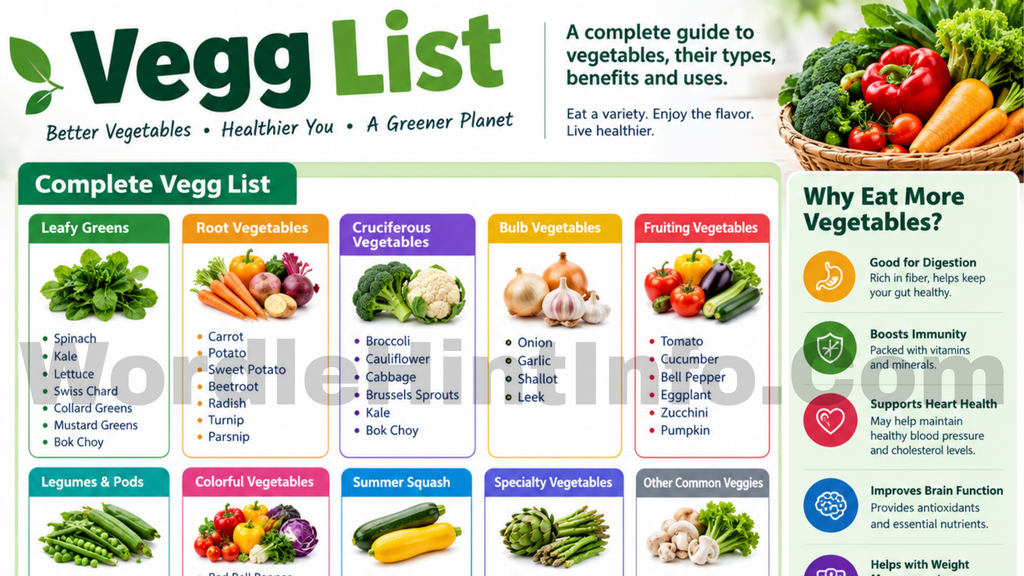
Complete Vegg List
The following table provides a useful overview of common vegetables and their categories.
| Vegetable | Category | Common Uses | Key Nutrients |
|---|---|---|---|
| Spinach | Leafy green | Salads, curries, smoothies | Iron, folate, vitamin K |
| Kale | Leafy green | Salads, soups, chips | Vitamins A, C, K |
| Lettuce | Leafy green | Salads, sandwiches | Vitamin K, folate |
| Cabbage | Cruciferous | Slaw, curry, soup | Vitamin C, vitamin K |
| Broccoli | Cruciferous | Steamed, roasted, stir-fry | Vitamin C, folate, fiber |
| Cauliflower | Cruciferous | Curry, roasting, rice substitute | Vitamin C, folate |
| Carrot | Root | Salads, soups, roasting | Beta-carotene, fiber |
| Potato | Tuber | Fries, curry, mash | Potassium, vitamin C |
| Sweet potato | Root/tuber | Roasting, baking, mash | Beta-carotene, potassium |
| Beetroot | Root | Salads, roasting, juice | Folate, manganese |
| Radish | Root | Salads, pickles, curries | Vitamin C, fiber |
| Turnip | Root | Soups, stews, curry | Vitamin C, fiber |
| Onion | Bulb | Curries, soups, sauces | Vitamin C, antioxidants |
| Garlic | Bulb | Seasoning, sauces, cooking | Vitamin C, sulfur compounds |
| Tomato | Fruit vegetable | Salads, sauces, curries | Vitamin C, lycopene |
| Cucumber | Fruit vegetable | Salads, raita, snacks | Water, vitamin K |
| Bell pepper | Fruit vegetable | Stir-fry, salads, roasting | Vitamins C and A |
| Eggplant | Fruit vegetable | Curry, grilling, roasting | Fiber, manganese |
| Zucchini | Summer squash | Stir-fry, roasting, soups | Vitamin C, potassium |
| Pumpkin | Squash | Soup, curry, baking | Beta-carotene, fiber |
| Peas | Legume | Curries, rice, soups | Protein, fiber, folate |
| Green beans | Legume/pod | Stir-fry, steaming | Fiber, vitamin C |
| Okra | Pod vegetable | Curry, frying, stews | Fiber, folate |
| Corn | Grain/vegetable | Boiling, grilling, salads | Carbohydrates, fiber |
| Asparagus | Stem | Grilling, roasting | Folate, vitamin K |
| Celery | Stem | Salads, soups | Vitamin K, water |
| Artichoke | Flower vegetable | Steaming, roasting | Fiber, folate |
| Brussels sprouts | Cruciferous | Roasting, steaming | Vitamins C and K |
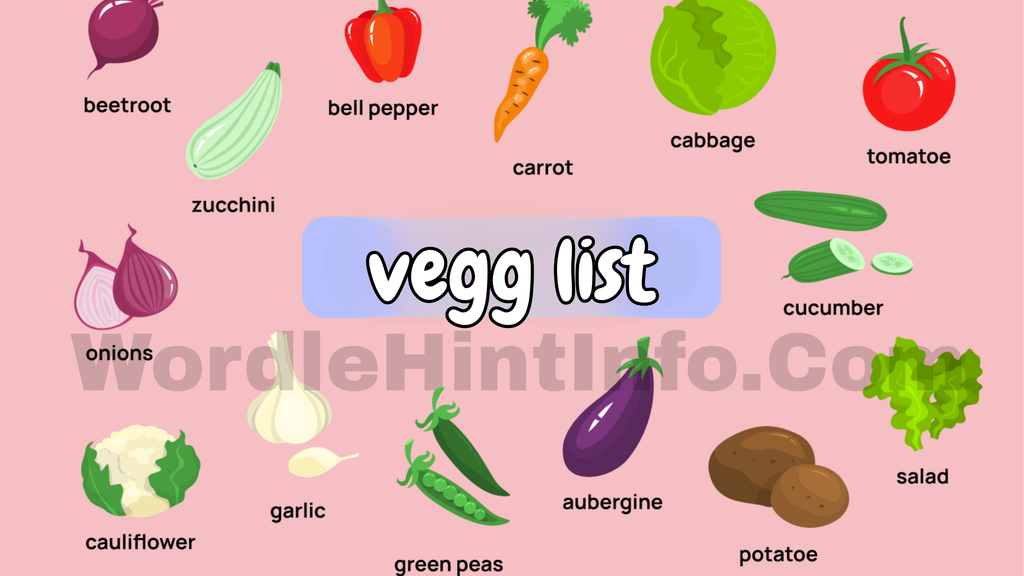
What Is a Vegg List?
A vegg list is essentially a collection of vegetables that can be used for meal planning, shopping, nutrition tracking, or general food knowledge. The word “vegg” is commonly used as a shortened form of “vegetable,” so a vegg list can simply mean a vegetable list.
A good vegg list include familiar vegetables as well as less common options. For example, potatoes, onions, tomatoes, carrots, and spinach are familiar to most households .vegg list Other vegetables such as asparagus, artichokes, Brussels sprouts, kale, and bok choy may be less frequently used depending on the region.
vegg list Creating categories makes a vegetable list more useful. Vegetables can be organized by plant part, such as roots, leaves, stems, bulbs, flowers, and pods. They can also be grouped by color or cooking method.
Read Trending Topic: GlaadVoice com: A Helpful Guide to Its Features, Content, and Benefits (2026)
Leafy Green Vegetables
Leafy greens are an important part of a varied diet. This group includes spinach, kale, lettuce, Swiss chard, collard greens, mustard greens, and bok choy.
These vegetables can be used in salads, soups, sandwiches, curries, wraps, and smoothies. Many leafy greens provide vitamins, minerals, fiber, and plant compounds.
Spinach is particularly versatile. It can be cooked with spices, added to eggs, blended into smoothies, or eaten in salads.
Lettuce is commonly eaten raw and works well in sandwiches and salads.
Kale has a stronger texture and flavor than lettuce and can be roasted, sautéed, or added to soups.
Adding different leafy greens to meals is an easy way to increase vegetable variety.
Root Vegetables
Root vegetables grow underground and include carrots, beets, turnips, radishes, parsnips, and sweet potatoes.
Carrots are among the most popular root vegetables. They can be eaten raw as a snack or added to soups, stews, rice dishes, and salads. Their orange color comes largely from carotenoids, including beta-carotene.
Beetroot is another colorful root vegetable that can be roasted, boiled, grated into salads, or incorporated into other dishes.
vegg list Turnips and radishes can provide a sharper flavor and are often used in soups, pickles, salads, and cooked dishes.
Sweet potatoes are naturally sweet and can be baked, roasted, mashed, or used in savory recipes.
Cruciferous Vegetables
Vegg list Cruciferous vegetables include broccoli, cauliflower, cabbage, Brussels sprouts, bok choy, kale, and related vegetables.
Broccoli can be steamed, roasted, stir-fried, or added to pasta and soups. Cauliflower is similarly versatile and can be roasted, cooked into curries, or turned into a rice-like preparation.
Cabbage can be eaten raw in slaws or cooked in soups, stir-fries, and traditional dishes.
These vegetables are popular because they combine a range of nutrients with relatively low energy density. Including different types throughout the week can add variety to a healthy eating pattern.

Bulb Vegetables
Bulb vegetables include onions, garlic, shallots, and leeks.
Onions are among the most widely used vegetables in cooking. They form the base of countless sauces, soups, curries, stews, and stir-fries.
Garlic is generally used in smaller quantities as a flavoring ingredient. It can be combined with onions, herbs, spices, vegetables, meat, or legumes.
Leeks have a mild onion-like flavor and can be used in soups and roasted dishes.
Although bulb vegetables are not always eaten in large portions, they can play an important role in making nutritious meals more flavorful.
Fruiting Vegetables
Some foods botanically qualify as fruits but are commonly treated as vegetables in cooking. Tomatoes, cucumbers, eggplants, zucchini, peppers, and pumpkins are examples.
Tomatoes are particularly versatile. They can be eaten raw, cooked into sauces, added to salads, or used in soups and curries.
Cucumbers contain a high amount of water and are commonly eaten raw in salads, sandwiches, and yogurt-based dishes.
Eggplant can absorb flavors well and works in grilled, roasted, baked, and curry recipes.
Bell peppers add color and a naturally sweet flavor to many dishes.
Legumes and Pod Vegetables
Peas and green beans are common examples of vegetables that come from pods. Other edible-pod vegetables include snow peas and sugar snap peas.
Green peas provide fiber and plant-based protein and can be added to rice, pasta, soups, curries, and salads.
Green beans can be steamed, roasted, stir-fried, or cooked with sauces and spices.
Okra is another popular pod vegetable. It is especially common in South Asian, Middle Eastern, African, and Southern U.S. cuisines.
These vegetables can help add texture, color, and nutritional variety to meals.
Colorful Vegetables
One useful way to improve a vegg list list is to organize vegetables by color.
Green vegetables: spinach, broccoli, peas, cucumber, zucchini, green beans, kale.
Red vegetables: tomatoes, red bell peppers, red cabbage, radishes.
Orange vegetables: carrots, pumpkin, orange bell peppers, sweet potatoes.
Purple vegetables: eggplant, purple cabbage, purple carrots, some varieties of potatoes.
White vegetables: cauliflower, onions, garlic, turnips, mushrooms.
Eating vegetables with different colors can make meals more visually appealing while increasing dietary variety. Different plants contain different combinations of vitamins, minerals, pigments, and other beneficial compounds.
Why Should You Eat More Vegetables?
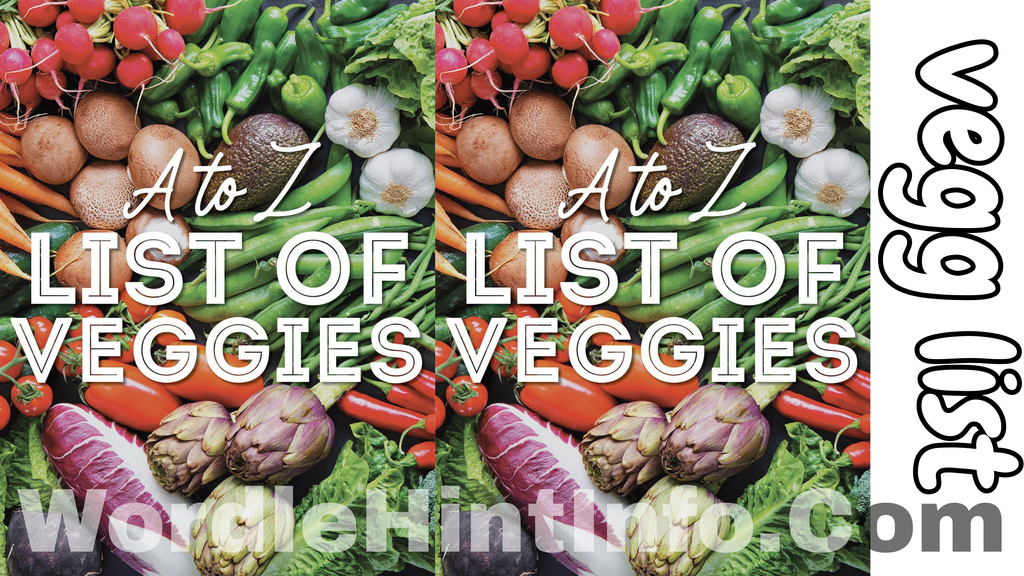
Vegetables can contribute significantly to a balanced eating pattern.
Fiber
Many vegetables provide dietary fiber, which supports normal digestive function and can contribute to feelings of fullness.
Vitamins and Minerals
Different vegetables provide different nutrients. Leafy greens can contribute vitamin K and folate, while orange vegetables are notable sources of carotenoid compounds.
vegg list Antioxidant Compounds
Many vegetables contain naturally occurring compounds that help protect plants from environmental stress. Some of these compounds are also being studied for their potential role in human health.
vegg list Hydration
Vegetables such as cucumber, lettuce, tomatoes, and zucchini contain substantial amounts of water. They can contribute to overall fluid intake alongside drinking water.
vegg list Variety
Perhaps one of the biggest benefits of maintaining a vegetable list is variety. Instead of repeatedly eating the same two or three vegetables, a list encourages you to try different foods throughout the week.
How to Build a Weekly Vegg List
A weekly vegetable list can make shopping and meal preparation much easier.
Start by selecting several vegetables from different categories. For example, you might choose spinach and lettuce for leafy greens, carrots and sweet potatoes for roots, broccoli and cauliflower for cruciferous vegetables, and tomatoes and bell peppers for colorful vegetables.
Then consider how you will use them.
For example:
- Spinach for breakfast or curry
- Tomatoes for sauces and salads
- Carrots for snacks or soups
- Broccoli for dinner
- Cucumber for salads
- Potatoes for a cooked meal
- Peas for rice or curry
- Bell peppers for stir-fry
This approach reduces the chance of buying vegetables without having a plan for using them.
Fresh, Frozen, or Canned Vegetables?
Fresh vegetables are an excellent option, but they are not the only choice.
Frozen vegetables can be convenient because they are easy to store and often require little preparation. They can be useful when particular vegetables are out of season.
Canned vegetables can also be convenient, although consumers should check labels for added salt or other ingredients. When appropriate, products with lower sodium can be preferable.
The most practical choice depends on availability, cost, storage, cooking habits, and personal preference.
How to Store Vegetables
Proper storage can reduce food waste.
Leafy greens generally benefit from refrigeration and should be protected from excessive moisture. Carrots and similar root vegetables can also be refrigerated for longer storage.
Potatoes are usually stored in a cool, dry, dark place rather than in the refrigerator.
Onions and garlic also generally need a cool, dry, well-ventilated environment.
Vegetables that are already cut should normally be refrigerated in suitable containers and used promptly.
Buying only the amount you can reasonably use is another effective way to reduce waste.
Are Oats Good for You? 7 Amazing Health Benefits You Should Know: Vegg List The Ultimate Guide to Vegetables, Their Types, Benefits, and Uses 2026Tips for Eating More Vegetables
You do not need to completely change your diet to eat more vegetables. Small adjustments can make a difference.
Add spinach or another leafy green to eggs or sandwiches. Include tomatoes and cucumber with lunch. Add carrots, peas, or broccoli to rice dishes. Replace part of a meat-heavy meal with vegetables, beans, or lentils.
Roasting vegetables can also make them more appealing because it brings out natural flavors and creates a different texture.
Another useful strategy is keeping ready-to-eat vegetables available. Washed cucumber, carrots, or bell peppers can make convenient snacks.
Most importantly, focus on variety rather than trying to find one “best” vegetable.
Final Thoughts on the Vegg List
A well-organized vegg list can be much more than a grocery-shopping checklist. It can help you discover new vegetables, plan balanced meals, reduce food waste, and add more variety to your everyday diet.
From spinach, kale, and lettuce to carrots, potatoes, broccoli, cauliflower, tomatoes, cucumbers, peppers, peas, and okra, there are many choices available. Each vegetable offers its own combination of flavor, texture, color, and nutrients.
The easiest approach is to choose vegetables from several categories and rotate them throughout the week. Include different colors, experiment with different cooking methods, and choose fresh, frozen, or canned options according to your needs.
vegg list Rather than focusing on one particular vegetable, think about the bigger picture: a diverse vegetable selection can make everyday meals more nutritious, colorful, and enjoyable.
